Colorado’s Top 150 Sports Moments
 The 150 significant moments in Colorado’s sports history will be announced weekly leading up to the state’s sesquicentennial (150th) birthday on August 1, the date Colorado was admitted to the Union as the 38th state in 1876. A committee with over 275 years of involvement in Centennial State sports is selecting the moments that we will count down at the rate of five per week, and then daily for the top 10 by the end of July. Colorado. David Plati, the Colorado Sports Hall of Fame historian, has identified more than 1,930 of these moments, all listed chronologically by date to indicate their importance at the time. PDF
The Denver Gazette has partnered with the CSHOF to publicize Colorado’s top 150 sports moments. Plati and Denver Broncos icon Jim Saccomano will unveil the list weekly on the CSHOF podcast at coloradosports.org/podcast/.
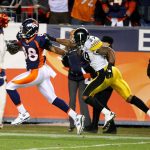 131 – January 8, 2012. The heavily favored Pittsburgh Steelers battled back from a 20-6 deficit to force overtime with the Denver Broncos after tying the game at 23-all in this AFC wild-card contest. Denver got the ball first at its own 20 to start the extra session, which would last all of 11 seconds. Tim Tebow threw a play-action pass to Demaryius Thomas, who caught the ball at the Denver 38 and then outdistanced Steeler defenders to the end zone for an 80-yard score, a 29-23 Bronco win that culminated in the quickest ending to an overtime in NFL history.
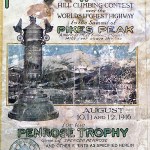 132 – August 10-12, 1916. The Pikes Peak International Hill Climb is run for the first time. Originally intended to stimulate tourism in the Colorado Springs and Pikes Peak region, it drew tremendous crowds from the start. Initially called the Pikes Peak Auto Hill Climb, Rea Lentz in a Romano Special won the inaugural race that covered 12.42 miles in 20 minutes and 55.6 seconds, with Floyd Clymer winning the motorcycle class in a time of 21:58.41. Over the years, the legendary Unser family (Louis, Bobby, Al, Robby, and Al Jr.) won a combined 25 titles racing the course, which climbs 4,725 feet from 9,390 feet to a summit of 14,115, with 156 turns in between.
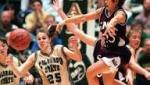 133 – March 15, 1999. Playing in her final home (a second-round NCAA tournament game), Colorado State senior Becky Hammon scored 30 points to lead the Rams to an 86-70 win over Southwest Missouri State to advance to the Sweet 16. Hammon was 6-of-12 from the field and 16-of-17 from the line and had eight assists. CSU finished 33-3 on the season after dropping the next game to UCLA. She scored 21 points in the 77-68 loss to the Bruins, finishing as the state’s all-time leading scorer by a woman’s collegian (2,740 points).
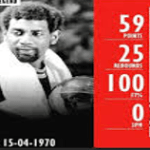 134 – April 15, 1970. Spencer Haywood scored an ABA record 59 points in the regular season finale, leading the Denver Rockets to a 152-116 win over the Los Angeles Stars in Denver. He grabbed 25 rebounds (and had three assists); the record would stand for two years. The 152 points matched Denver’s most in an ABA game at that point, first done just a week before (April 8) against the Dallas Chaparrals in a 152-113 win. Denver would top 152 points three times in future ABA play, 156 and 153 in overtime games, and in a 155-128 regulation win over Virginia in the league’s last season, when all 10 players scored in double figures.
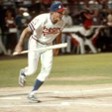 135 – July 13, 1984. The second “Denver Dream” old-timers baseball game drew 38,899 to Mile High Stadium, with the highlight being Vice President George H.W. Bush not only in attendance but also playing in the game. Donning a Denver Bear uniform, he went 1-for-2 from the plate; he first faced Warren Spahn, popping up to second baseman Milt Pappas (who intentionally dropped the ball) before singling to center of Pappas his next time up. He also played a couple of innings at first base, where he robbed Tony Oliva of a single, guarded by Secret Service agents. The 60-year old Bush was in town for the state’s GOP convention that weekend. On hand to sign autographs among many Hall-of-Famers were Joe DiMaggio and Billy Martin.
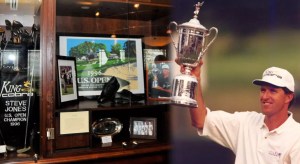 136 – June 16, 1996 (Father’s Day). Steve Jones is the second Colorado high school alum (Yuma) and second Colorado Buffalo to win the U.S. Open, as he turned in a 2-under par performance (74-66-69-69-278) at Oakland Hills Country Club in Michigan, defeating Tom Lehman and Davis Love III by one stroke. The three battled it out over the back nine, and all were tied at 2-under down the stretch, Love on the 18th green and Jones and Lehman on the 18th tee. Love three-putted, Lehman hit a bad drive and would bogey. Jones hit his approach to 12 feet and two-putted for the win. The win wasn’t a fluke—only 51 subpar rounds were recorded over the four days, and Jones was the only player with three. In the process, he became the first sectional qualifier to win the U.S. Open in 20 years and the second Coloradan to attend high school and college in the state to win a U.S. Open, the other, of course, being Hale Irwin.
 137 – February 8, 1994. Though Denver lost to Utah, Nuggets forward Rodney Rogers accomplished a feat unmatched before or since. He scored nine points in as many seconds on three 3-point field goals. He made the first from the top of the key with 29.4 seconds to play; Robert Pack stole the ball and fed it to him, and Rogers drilled the second from the same spot with 24.9 seconds on the clock. He then stole the in-bounds pass himself and strutted to the three-point line on the right baseline and sank his third three-pointer with 20.9 seconds to go – the crowd at McNichols Sports Arena went bananas. But Jeff Malone made the game-winner for the Jazz with 12 seconds left for a 96-95 win. Rogers suffered a paralyzing accident in 2008 and passed away this past November at the age of 54.
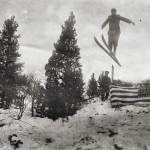 138 – February 14-15, 1912. The Winter Sports Club of Hot Sulphur Springs hosted the state’s first Winter Sports Carnival, which drew 8,000 spectators, including competitors. The competitions included sledding, skating, cross-country skiing, and jumping. Norwegian transplant Carl Howelsen (pictured), who moved to the state a year earlier, was the star, winning the jumping event with a 79-foot leap. Hot Sulphur Springs is halfway between Kremmling and Granby, so it begs the question: in 1912, how did 8,000 people get there, and where did they stay?
 -

John McBroom 139 – May 10, 1967. In perhaps the greatest single game in state collegiate baseball history, Air Force senior outfielder John McBroom had a career in the Falcons’ 38-7 win over Colorado College. He set what still stand as NCAA records as he batted 1.000 – going 9-for-9, the most hits in a single game, and the highest 1.000 average without an out. He scored six runs and had 12 runs batted in and 19 total bases (the latter two still AFA marks). He almost hit for the cycle twice – he hit two home runs, with one triple, three doubles, and four singles. He would go on to become a flight instructor, among other accomplishments, and retire as a Major General.
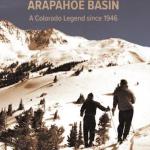 140 – November 1, 1946. Arapahoe Basin is the first ski area after World War II to begin operations in the state; it borders the Continental Divide with a summit elevation of 13,050 feet, one of the highest ski resorts in the world. The original cost was estimated at $150,000, which included two lifts, a rope tow, and trails; lift tickets for the ’46-’47 ski season were just $1.25. A year later, it added its first chair lift and attendance soared to over 12,000 (70,000 by the ’61-62 season).
 141 – July 3, 1982. Denver entered the national record books again, as the Bears’ annual Fireworks Night drew a minor-league record 65,666 fans – as announced at the time. The Denver fire marshal told team officials the crowd had to be capped at that number, but the true attendance was 73,155 as confirmed years later by business manager Bobby Burris (not to mention by looking at an aerial photo of the Mile High Stadium from that night – in no way were there 10,000 empty seats). Omaha spoiled things with a 7-4 win in a strange game, outhitting the Bears 17-5, with the contest scoreless through five and then each team scoring in their remaining four frames. In fact, Omaha’s Bill Kelly had a no-hitter entering the sixth and had it broken up with a triple by Denver native and Abraham Lincoln High School grad Nick Capra.
 142 – August 5, 1967. The Denver Broncos became the first AFL team to defeat an NFL team, downing the Detroit Lions, 13-10, at DU Stadium in what some called “The Little Super Bowl.” The Lions’ Alex Karras stated prior to the game that there was no way Denver would win, and if it did, he’d walk back to Detroit. Did he? Of course not. Two weeks later, the Broncos defeated Minnesota 14-3 at DU Stadium. It was the first year the two leagues played preseason games ahead of the 1970 AFL-NFL merger; of the 15 games that year, the AFL won three, two by the Broncos.
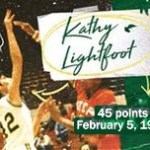 143 – January 5, 1982. Colorado State senior guard Kathy Lightfoot scored 45 points in a 118-54 win over Southern Colorado in Fort Collins, to date the most points in a single game by a Division I player in the state. Lightfoot had 21 field goals and made 3-of-4 from the free-throw line. The state’s collegiate best for women, across all divisions, is a 51-point effort by the late Carroll Lillie of Southern Colorado (now CSU Pueblo), in an 82-80 overtime loss to St. Mary’s of the Plains on December 3, 1979.
 144 – September 4, 2004. At 12:30 p.m. MDT, the Altitude Sports & Entertainment Network went on the air, a property of Kroenke Sports Enterprises (KSE). Over $10 million was spent on building a studio, installing production equipment, hiring personnel, and marketing the channel. The first program? A 30-minute special on the making of the network; there were 850,000 to one million subscribers at its launch. The first game was supposed to be the Colorado Avalanche’s season opener at home (on Oct. 1), against San Jose, but the NHL lockout on Sept. 16 cancelled the season.
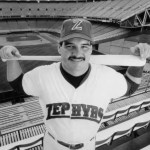 145 – June 2, 1987. The Denver Zephyrs’ Joey Meyer hit what many have documented as the second-longest home run in all baseball history – 582 feet – in the Zephyrs’ 14-7 win over the Buffalo Bisons. Meyer’s shot landed in the upper deck in left field of Mile High Stadium’s massive east stands. Meyer hit three homers that night, driving in seven runs; the longer blast came on a 2-2 pitch from Mike Murphy in the bottom of the seventh inning. On September 10, 1960, in Detroit, Mickey Mantle hit a homer estimated at 643 feet that coined the phrase, “tape-measure home run” in the Yankees’ 5-1 win over the Tigers, universally considered the longest home run ever hit.
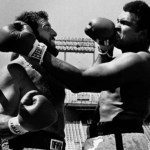 146 – July 14, 1979. It was only an exhibition, as former heavyweight boxing champion Muhammad Ali fought an eight-round match against Denver Broncos defensive lineman Lyle Alzado. Around 20,000 fans attended the event at Mile High Stadium, which wasn’t officially scored but went on all eight rounds; most, if not all, thought Ali won easily. About 600 miles to the East that same night, Jamie Easterly of the Denver Bears pitched a perfect game in the Bears’ 10-0 win over the Iowa Oaks in Des Moines. That was the last of seven no-hitters in Denver’s minor league history that spanned over 100 years.
 147 – September 13, 2000. In high school boys’ tennis, Wheat Ridge defeated Cherry Creek, 5-2, ending the Bruins’ remarkable dual-match winning streak at 316, the longest in the nation. The streak ended when Paul Tinetti ripped a forehand winner down the line to give him and partner Brian Fisher a 7-6 (7-2), 6-2 victory at No. 2 doubles. In 1991, it was Wheat Ridge that ended Cherry Creek’s run of 19 straight national record state championships. The streak, which began in 1972 during Richard Nixon’s first term as president, was and remains the second-longest in the country, behind only the Brandon, Fla., wrestling team, which won 459 consecutive dual meets from 1973 to 2008.
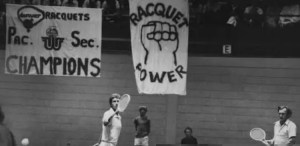 148 – August 26, 1974. The first championship by any Denver professional team (other than minor league baseball) was claimed by the Denver Racquets. They won the inaugural World Team Tennis league title. The Racquets defeated the top-seeded Philadelphia Freedoms, two games to zero in the best-of-three finals. Denver won the Pacific Section with a 30-14 record and beat the San Francisco Golden Gators and the Minnesota Buckskins to reach the finals. The teams were composed of half men and half women; Philadelphia was led by Billie Jean King, the league MVP; Australian Tony Roche (pictured right) was Denver’s player-coach; and the team also had the playoffs MVP, Andrew Pattison (pictured left).
-

Bob Martin 149 – April 12, 1965. Bob Martin hosted the first sports talk show in the state (and possibly the nation) on this April Friday, when he aired “Sports Line,” interviewed Bronco head coach Mac Speedie, and took public calls. It aired for one hour (6-7 p.m.) on KTLN Radio (1280 AM). Speedie was named interim head coach the previous October when Jack Faulkner was fired, and the interim tag was removed in an announcement on December 12.
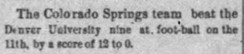 150 – April 11, 1885. In the first intercollegiate football game played west of the Mississippi River, Colorado College defeated the University of Denver Ministers, 12-0. Early newspaper accounts never listed any stats or even most of the scoring plays, opting instead to write mostly about who played in the game and who was the stoutest. Both institutions had been around for a while, DU since 1864 and CC since 1874, as the first intercollegiate football game took place in 1869 (Rutgers 6, Princeton 4). The game methodically spread west.