This week’s memorable sporting moments feature No. 101 through No. 105 as former Denver Bears executive Bob Burris joins David Plati and Jim Saccomano on the Colorado Sports Hall of Fame podcast on Monday. PODCAST
The 150 significant moments in Colorado’s sports history are being released weekly, leading up to the state’s sesquicentennial (150th) birthday on August 1, the date Colorado was admitted to the Union as the 38th state in 1876. A committee with over 275 years of involvement in Centennial State sports is selecting the moments we will count down at a rate of five per week, then daily for the top 10 by the end of July. Colorado. Plati, the Colorado Sports Hall of Fame historian, has identified more than 1,930 of these moments, all listed chronologically by date to indicate their importance at the time.
The Denver Gazette has partnered with the CSHOF to publicize Colorado’s top 150 sports moments. Plati and Denver Broncos icon Saccomano are unveiling the list weekly on the CSHOF podcast at coloradosports.org/podcast/.
 No. 96 – December 6, 2025. Cherry Creek sprinted to a 28-0 lead and went on to defeat Ralston Valley, 56-28, giving head coach Dave Logan his 13th state championship, his sixth with the Bruins. The only coach to win titles at four different schools (no one else has more than two), he moved into a tie for the 29th-most nationally. He added to his winningest total in the state of Colorado, as earlier in the decade, he passed Limon’s Floyd Gaskill, who won 10. Logan’s 355 wins are second all-time in the state, as is his .833 winning percentage through the 2025 season.
 No. 97 – January 30, 2025. The National Women’s Soccer League (NWSL) awarded an expansion franchise to Denver, the league’s 16th, which would begin play in 2026. The expansion fee was $110 million, and the team was officially named “Denver Summit FC.” It made its debut on March 14, 2026, losing 2-1 to Bay FC at PayPal Park in San Jose. Melissa Kossler scored the first goal in franchise history in the 20th minute that tied the game at 1-1.
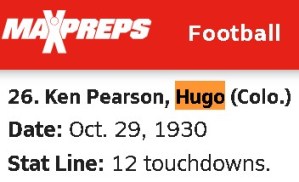 No. 98 – October 29, 1930. Ken Pearson scored a national high school record that still stands – 12 rushing touchdowns in Hugo’s 176-6 win over Vona at home. The 12 TD’s remain a state record and tied for the second-most in the history of schoolboy football nationally. The 182 combined points were the most in a Colorado prep game at the time and, almost a century later, are still second; the margin of victory is still first. Hugo scored over 100 points two other times that season (106-0 over Flagler, 104-0 versus Burlington). Pearson died in 2008 at the age of 96.
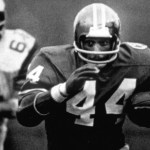 No. 99 – December 14, 1975. Floyd Little capped his nine-year professional career by leading Denver to a 25-10 win over Philadelphia in his final home game. After the Eagles tied the game at 10-10 in the third quarter, he scored what proved to be the winning points with a 66-yard touchdown reception on a screen pass from Steve Ramsey. He then scored the final points of the game on a 2-yard TD run with 1:57 to play, finishing the game with 56 yards on 19 carries and five receptions for 94 yards. Fans, who braved the 15-degree temperatures to watch the NFL’s seventh all-time leading rusher in his final home appearance, gave him standing ovations every time he left the field and carried him off as he blew kisses to the spectators in Mile High Stadium’s fabled South Stands.
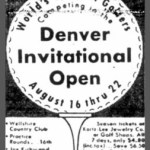 No. 100 – August 22, 1948. Ben Hogan won the Denver Open at Wellshire Golf Course, defeating Fred Haas, Jr., by one stroke; his 18-under par 270 scorecard earned him $2,150. It was his sixth straight win on the PGA Tour, the second-longest streak at the time and still tied for the third-longest to this day (and not matched until 2000 by Tiger Woods). Wellshire opened in August 1926 and will celebrate its 100th anniversary this summer. Its history includes the longest active continuous tournament in Colorado (the Wellshire 4-ball), Arnold Palmer finishing third in the ’58 Denver Open, two years before returning to the state to win the U.S. Open, and Bill Wright winning the ’59 Public Links title, the first African American to win a major golf tournament.
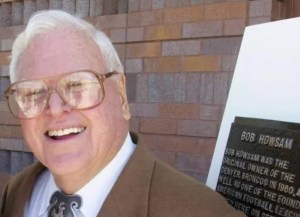 101 – November 29, 1954. After weeks of speculation and negotiation, Bob Howsam purchased the defunct Kansas City franchise (for $75,000) that elevated Denver to the American Association and triple-A baseball, while the New York Yankees remained the parent club of the franchise with its move to Denver. The banner headline on the Denver Post’s sports page screamed in all caps: DENVER GETS TRIPLE A!
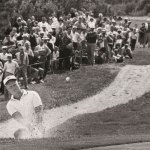 102 – September 19, 1959. The U.S. Amateur was held for the first time in the state, with 19-year-old Ohio State University junior Jack Nicklaus emerging as the winner on the Broadmoor East Course, defeating Charlie Coe, 1-up. It was the first USGA championship of his career.
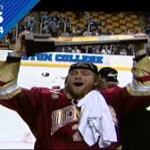 103 – April 10, 2004. The Denver Pioneers won their sixth NCAA hockey title – their first in 35 years – with a 1-0 win over the University of Maine in Boston. Gabe Gauthier took a pass from Connor James and scored on a power play for the game’s only goal at the 12:26 mark of the first period; Adam Berkhoel stopped 24 Black Bear shots on goal to earn the shutout, including two in the final 90 seconds when Maine had a rare 6-on-3 man advantage.
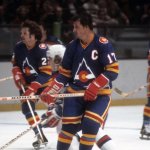 104 – October 5, 1976. Hockey was back, but in the NHL for the first time ever – the Kansas City Scouts had relocated to Denver as the Colorado Rockies. They won their first game, defeating the Toronto Maple Leafs, 4-2, before a sparse crowd of 7,359 at McNichols Sports Arena. Rookie Larry Skinner scored the first Colorado goal, which was assisted by Chuck Arnason and Wilf Paiement (who had a goal and two assists), with two Colorado goalies combining to stop 39 of 41 shots.
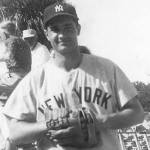 105 – May 24, 1959. The driving force behind Grand Junction landing the Division I Junior College World Series was Sam Suplizio, who settled there after his professional playing days. The inaugural event the year before was held in Miami, but the former major leaguer sold the Baseball Congress on relocating the tournament to Grand Junction in 1959, where it has been held ever since, and played on the field baseball congress on relocating the tournament to Grand Junction in 1959, where it has been held ever since, and played on the field that has been named in his honor. Paris (Texas) Junior College won the first one held in Grand Junction, besting Northeastern Oklahoma in the title game, 14-4.
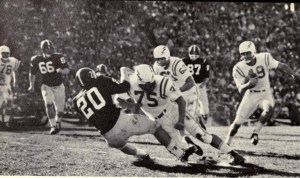 106 – January 1, 1959. The Air Force Academy, the football program in just its fourth year of existence and ranked No. 6, earned its first New Year’s Day Bowl berth, opposite No. 10 TCU in the Cotton Bowl. On a cool, 48-degree day in Dallas, the teams battled to a scoreless tie, combined for just 458 yards of offense, and fumbled the ball 13 times, turning it over 8 times. AFA, in its first season under coach Ben Martin, finished 9-0-2 and was undefeated against state schools (CU, CSU, and DU).
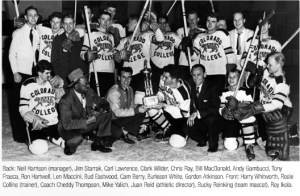 107 – March 18, 1950. Colorado College won the state’s first NCAA championship, played in Colorado Springs, as the Tigers’ men’s hockey team defeated Boston University, 13-4. Chris Ray led the offensive explosion with four goals and two assists, with Tony Frasca scoring twice and aiding on two others as CC poured it on in the third period, scoring 10 goals. Coach Cheddy Thompson’s team defeated Boston College, 10-3, in the semifinals. Colorado Sports Hall of Famer Andy Gambucci was a member of that team. CC posted an 18-5-1 record, scored 190 goals in 24 games, including 10 or more on nine occasions. The 13 goals remain the most in a championship game, matched just once by CC in 1957.
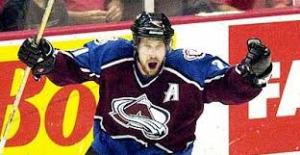 108 – March 3, 1999. Peter Forsberg led the largest comeback in Avalanche history, scoring three goals with three assists for six points in Colorado’s 7-5 win in Miami. With the Panthers ahead 5-0, Forsberg got the Avs on the board at the 18:11 mark of the second period; Colorado then exploded for a team-record tying six goals in the third period, with Forsberg scoring the third and final goals, with the other four put in the net by four different players. The six points by Forsberg tied the Avalanche single-game record set by Joe Sakic in 1996.
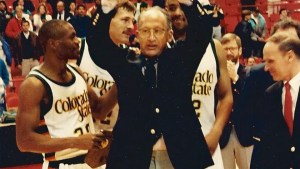 109 – March 4, 1989. Heading into the final day of the regular season, Colorado State was 11-4 in Western Athletic Conference play, tied atop the standings with New Mexico and one game up on Texas-El Paso. Coach Boyd Grant, wanting to ease the tension among the team, took the Rams to a movie on Friday Night: Lean on Me. Pat Durham scored 31 points to lead CSU to an 89-72 win, though BYU led 40-38 at the half; the Rams shot 78 percent from the field in the second half (14-of-18, including six threes) to pull away for a decisive win. Later that day, New Mexico was upset at home by Hawai’i (71-70), CSU was alone in first and won its first conference title since the Mountain States in 1954.
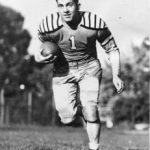 110 – August 25, 1944. One of the top athletes from northwest Colorado, Lewis “Dude” Dent, was gunned down by Nazi forces near Troyes, France, in World War II. He earned eight letters combined in football, basketball, and track at Craig High School, and earned a football scholarship to Colorado A&M, where he earned all-conference honors and the Mountain States Conference “best all-around athlete” honor in 1943. Four credits shy of earning his degree in mechanical engineering, he was called up to fulfill his officer commission. He was awarded the Silver Star posthumously for gallantry in action against an enemy of the United States.
 No. 111 – December 13, 1983. The wildest – and highest scoring – game in NBA history took place at McNichols Sports Arena in Denver: 370 total points were scored in a three-overtime thriller. The visiting Detroit Pistons left town with a 186-184 victory. It was tied at 74 at halftime and 145-all at the end of regulation. In a different time, while the Nuggets and Pistons combined to take 251 shots, each team was just 1-of-2 from 3-point range; thus, 140 of the 142 field goals were traditional two-point baskets. Six players scored 28 or more points – four over 40, with Denver’s Kiki Vandeweghe leading all scorers with 51, with Alex English adding 47 and Dan Issel 28; Detroit was led by Isaiah Thomas with 47 and John Long with 41.
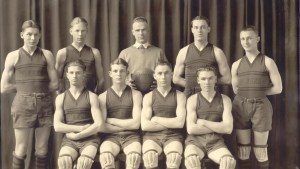 No. 112 – April 5, 1924. Tiny Windsor High School, the two-time state champ from the town with the same name northeast of Loveland and a population of 1,290, won the National Interscholastic Basketball Championship in Chicago, defeating Yankton, S.D., 25-6. The event started with 40 teams, and in the end, the Bulldogs beat four other state champions and won five games, leaving them the only undefeated team standing. Arthur Law led the way in the title game with 12 points. The school changed its nickname to Wizards following the win after being referred to as such in media accounts.
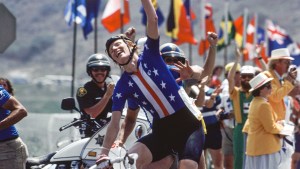 No. 113 – July 29, 1984. Boulder’s Connie Carpenter-Phinney became the first American woman to win the gold medal in Olympic road cycling, winning the 79-kilometer race at the Los Angeles Summer Games. Neck-and-neck with fellow American Rebecca Twigg, the two accelerated into a frantic sprint over the last 50 meters, with Carpenter winning by all of two inches to claim the gold. It would be 40 years until the next American woman would win the gold. Her husband, Davis Phinney, won a bronze medal in cycling in the same L.A. games.
 No. 114 – March 18, 1961. In Hutchinson, Kan., Pueblo Junior College won the National Junior College Athletic Association’s (NJCAA) basketball title, completing a four-game tourney sweep by defeating Tyler (Texas), 79-66. Bob Warlick, named the tournament’s MVP, led the Indians in the tournament, scoring 86 points; he had 26 in the title game. The team was coached by the late Harry Simmons, a 1982 inductee into the Colorado Sports Hall of Fame.
 No. 115 – April 15, 2019. One of the great debuts in local hockey history, and it happened in the playoffs. Three days after Cale Makar was named winner of the Hobey Baker Award as the top collegian and two days after his UMass Minutemen lost to Minnesota in a Frozen Four semifinal, Makar made his professional debut in game three of the first round of the Stanley Cup playoffs. The first (and to date only) defenseman in NHL history to make his debut in the playoffs and score a goal in his very first game – and on his very first shot-on-goal – in Colorado’s 6-2 win over the Calgary Flames.
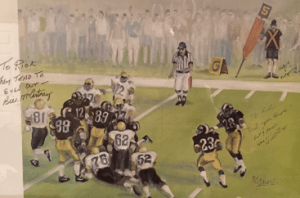 116 – On October 6, 1990 – Not exactly the greatest moment, but certainly a memorable one since it has occurred three times in history: CU’s 33-31 win at Missouri made major headlines. Trailing 31-27, the Buffs had a first-and-goal at the Mizzou 3. The chain crew failed to move the down marker from second to third. Mizzou’s Omni-Turf was also in terrible condition, and the correct shoe was needed to avoid slipping; MU never informed CU of that fact, and coaches documented 92 slips and falls by Buff players – 16 of which were documented and shown on ESPN’s GameDay the next Saturday. But Fifth Down was the bigger controversy.
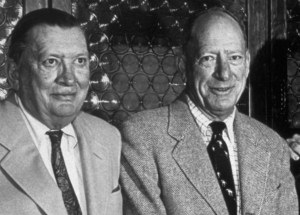 117 – On February 1 1965 – Until Gerald H. and Allan R. Phipps purchased undisputed control of the Denver Broncos for $1.5 million on February 14, 1965 – to increase their ownership of the team to 94 percent by gaining 52 percent with the immediate cash payment – the voting trust headed by spokesman and team president Calvin Kunz were seriously flirting with selling the team to the Atlanta-based Cox Broadcasting Company. Kunz and the trust had an offer of slightly over $4 million from them to purchase all of the stock until the Phipps brothers and their firm, Empire Sports Inc., took full control of the franchise and saved pro football in Denver (they purchased the Denver Bears the same day).
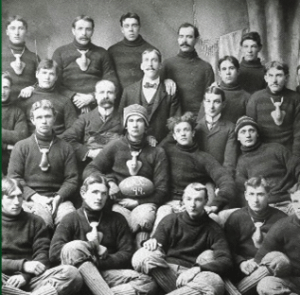 118 – On November 30, 1899 – The first meeting in the series that would eventually be known as the “Border War” took place when Colorado Agricultural College (Colorado State) and the University of Wyoming met for the first time. It was the first game CSU ever played outside of the state, and it won 12-0 by forfeit after a controversial ending with the officials, who were provided by both schools. They have played 117 times, with CSU leading 60-52 with five ties. The two will be in different conferences for the first time in over a century beginning this fall, but the schools have agreed to keep the series alive – it’s the opener for both on September 5 in Fort Collins.
 119 – The 1911 Denver Grizzlies of the Class-A Western League were voted one of the top 100 minor league teams of all-time in 2001 (No. 22 on the list); the team finished with a 111-54-3 record. Games were much quicker (no radio or television, or lights); Denver won a game 6-0 at Topeka that was played in 1 hour and 15 minutes; it had a 13-inning game played at 2:10. Games were called because of darkness or if one or both teams needed to catch a train to their next location. A pitcher on that team was named Ed Kinsella – no idea if his name was utilized in 1989’s Field of Dreams (Kevin Costner played Ray Kinsella, who had a dysfunctional relationship with his major league father, John).
 120 – On February 17, 2001. In what many called the biggest prep wrestling upset in state history, Wasson’s Brett Roller defeated Pomona’s Tom Clum, 13-12, in the Colorado 5A 125-pound state wrestling championship before over 17,000 in attendance at Pepsi Center. At the time, Clum was an undefeated, three-time state champion with a 148-0 career record and was seeking to become Colorado’s first-ever state champion. Roller earned five points in the final seconds (two for a takedown, three for back points) to win the match; he finished the season with a 39-1 record.
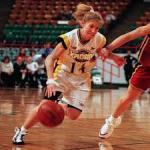 121 – December 8, 1996. The Colorado Xplosion’s Debbie Black became the first woman and only the fifth professional ever to record a quadruple-double, with 10 points, 14 rebounds, 12 assists, and 10 steals in a 91-75 home win over the Atlanta Glory (40-minute game as compared to the NBA’s 48-minute game). It has occurred only four times officially in the NBA, all before Black’s – by Nate Thurmond, Alvin Robertson, Hakeem Olajuwon, and David Robinson. It is likely that Wilt Chamberlain did it before blocked shots were tracked. Black’s is the last quadruple-double in pro ball; Grambling’s Shakyla Hill had two, one each in 2018 and 2019.
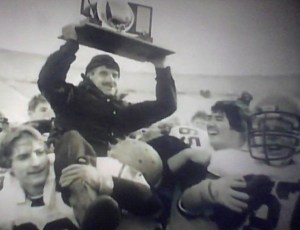 122 – November 30, 1985. In what many consider to be one of the greatest upsets ever in Colorado high school football, Lakewood, with all of 27 players on its roster, manhandled heavily favored Cherry Creek, 47-8, in the 4A championship game. It wasn’t a fluke; Lakewood finished 13-1 with the Tigers’ average margin of victory being 22 points. On a frigid day at CU’s Folsom Field, Lakewood zoomed to a 31-0 halftime lead and never looked back; the Tigers outgained the Bruins, 401-194 in total offense in what is still one of – if not the – most lopsided title games in state prep history.
 123 – May 3, 1972. The Denver Spurs, regular-season champions of the Western Hockey League, went on to win the Lester Patrick Cup by defeating the Portland Buckaroos 6-0 and the championship series in five games. Denver had swept the San Diego Gulls, four games to none in the semifinals. Frank Huck, the league MVP, scored nine goals with four assists in the playoffs; rookie defenseman Glen Patrick was the first to receive the Patrick Cup postgame, as it was named after his grandfather. It was the city’s first professional hockey title, some 24 years before the Colorado Avalanche won the Stanley Cup.
 124 – June 11, 1955. In its third appearance in the College World Series, the University of Northern Colorado recorded the first win by a state college in the event, upsetting top-ranked Southern California, 2-1. Wayne Coates doubled home, George Sage in the fourth inning, giving the Bears a 2-0 lead; Sage pitched a complete game and allowed only six hits, striking out three. UNC would then be eliminated by Wake Forest and Arizona. Northern Colorado has the most appearances of any state school in the College World Series, as the Bears have won 10 District VII and/or Regional titles to advance to the Series, the last time in 1974; the Bears are 3-20 in CWS games.
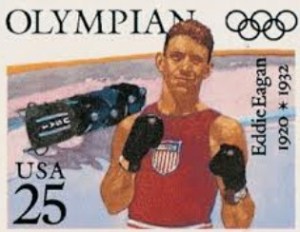 125 – August 25, 1920. The state’s first Olympian, Denver native and Longmont High School graduate Eddie Eagan, won the gold medal in the light heavyweight competition at the 1920 Summer Olympics in Antwerp, Belgium. Twelve years later, he made Olympic history that still hasn’t been matched: he became the first and only athlete to win gold medals in the Summer and Winter Olympics – on February 15, 1932, he was on the U.S. team that won the gold in the four-man bobsled at Lake Placid, N.Y.
 126 – November 28, 1889. The first game in one of college football’s longest rivalries was played in Colorado Springs, with Colorado Mines defeating Colorado College on Thanksgiving Day, 14-6. The team pictured to the right is the 1990 Colorado Mines squad that won a championship that season.
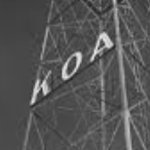 127 – KDKA-Radio in Pittsburgh was the first to broadcast sporting events on radio in 1921, beginning with a prize fight and then expanding into team sports. The “first” sports broadcast in Colorado was on an experimental station owned by H.H. Buckwalter and located at 713 Lincoln Street. While not a truly complete broadcast in the sense, on February 10, 1922, constant live updates were provided for CU’s 32-20 win in basketball at DU. On April 15, 1926, the first full game involving a team from the state was broadcast, as 5,000-watt KOA-Radio, which began broadcasting in 1924 and was then located at 830 am on the dial, picked up the Denver Bears’ season opener at St. Joseph (Denver lost, 6-2). The first full game originated locally was on November 25, 1926, once again on KOA, which selected the annual CU-DU Thanksgiving Day clash at DU Stadium. The station remained off the air from the previous night until the 2 p.m. kickoff – Denver won the game, 20-9.
 128 – May 22, 1914. University of Colorado freshman pitcher Bob McGraw – a future major leaguer – struck out what remains a state collegiate record 20 batters in the Silver & Gold’s 7-1 win versus Colorado College in Boulder. In throwing a 2-hitter, McGraw also went 2-for-4 at the plate with a home run. It was the second-most strikeouts at the time in all of college baseball, and the win also clinched the RMAC title for CU. In 1917, he signed with the Philadelphia Phillies and became the state’s first player to reach the major leagues. (By the way, CU batters struck out 13 times, for 33 total whiffs in the game.)
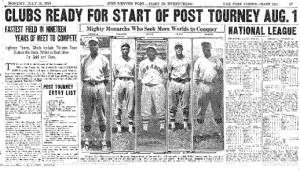 129 – August 1, 1934. The 19th Annual Denver Post Baseball Tournament, in what became known as the “Little World Series of the West,” was integrated for the first time. Post sports editor Poss Parsons wanted the tournament to feature the most competitive teams, thus he invited Negro League players to participate for the first time, starting with the Kansas City Monarchs (the Negro League champions) and the Denver White Elephants. The White Elephants featured the only Colorado-born player in the Negro League, Theodore “Bubbles” Anderson. The tournament started in 1915 and attracted the top semi-pro teams in the sport until it was discontinued in the mid-1940s.
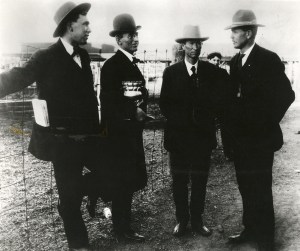 130 – January 29, 1906. The recently completed National Western Stock Show was born from several stock fairs and exhibits, originally called the Western Livestock Show, and was held in the stockyards in North Denver. Three local businessmen were credited for organizing the initial gathering of no less than six associations: Elias Ammons and George Ballantine of the Denver Union Stock Yard Company, and Fred P. Johnson (publisher of the Record-Stockman). When all was said and done, 351 cattle, sheep, and hogs were shown over the six-day event. One of the actual early precursors to the National Western was on June 30, 1874 – Denver Blood Stock Association’s Blood Stock Fair opened, five days of showing thoroughbred cattle divided into five groupings of purebred cattle: Shorthorns, Herefords, Devons, Jerseys & Ayrshires, and Galloways (a purse offered $15,000 in prizes).
 131 – January 8, 2012. The heavily favored Pittsburgh Steelers battled back from a 20-6 deficit to force overtime with the Denver Broncos after tying the game at 23-all in this AFC wild-card contest. Denver got the ball first at its own 20 to start the extra session, which would last all of 11 seconds. Tim Tebow threw a play-action pass to Demaryius Thomas, who caught the ball at the Denver 38 and then outdistanced Steeler defenders to the end zone for an 80-yard score, a 29-23 Bronco win that culminated in the quickest ending to an overtime in NFL history.
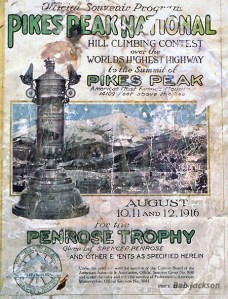 132 – August 10-12, 1916. The Pikes Peak International Hill Climb is run for the first time. Originally intended to stimulate tourism in the Colorado Springs and Pikes Peak region, it drew tremendous crowds from the start. Initially called the Pikes Peak Auto Hill Climb, Rea Lentz in a Romano Special won the inaugural race that covered 12.42 miles in 20 minutes and 55.6 seconds, with Floyd Clymer winning the motorcycle class in a time of 21:58.41. Over the years, the legendary Unser family (Louis, Bobby, Al, Robby, and Al Jr.) won a combined 25 titles racing the course, which climbs 4,725 feet from 9,390 feet to a summit of 14,115, with 156 turns in between.
 133 – March 15, 1999. Playing in her final home (a second-round NCAA tournament game), Colorado State senior Becky Hammon scored 30 points to lead the Rams to an 86-70 win over Southwest Missouri State to advance to the Sweet 16. Hammon was 6-of-12 from the field and 16-of-17 from the line and had eight assists. CSU finished 33-3 on the season after dropping the next game to UCLA. She scored 21 points in the 77-68 loss to the Bruins, finishing as the state’s all-time leading scorer by a woman’s collegian (2,740 points).
 134 – April 15, 1970. Spencer Haywood scored an ABA record 59 points in the regular season finale, leading the Denver Rockets to a 152-116 win over the Los Angeles Stars in Denver. He grabbed 25 rebounds (and had three assists); the record would stand for two years. The 152 points matched Denver’s most in an ABA game at that point, first done just a week before (April 8) against the Dallas Chaparrals in a 152-113 win. Denver would top 152 points three times in future ABA play, 156 and 153 in overtime games, and in a 155-128 regulation win over Virginia in the league’s last season, when all 10 players scored in double figures.
 135 – July 13, 1984. The second “Denver Dream” old-timers baseball game drew 38,899 to Mile High Stadium, with the highlight being Vice President George H.W. Bush not only in attendance but also playing in the game. Donning a Denver Bear uniform, he went 1-for-2 from the plate; he first faced Warren Spahn, popping up to second baseman Milt Pappas (who intentionally dropped the ball) before singling to center of Pappas his next time up. He also played a couple of innings at first base, where he robbed Tony Oliva of a single, guarded by Secret Service agents. The 60-year old Bush was in town for the state’s GOP convention that weekend. On hand to sign autographs among many Hall-of-Famers were Joe DiMaggio and Billy Martin.
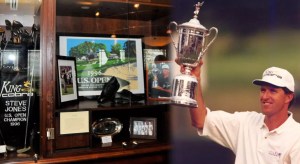 136 – June 16, 1996 (Father’s Day). Steve Jones is the second Colorado high school alum (Yuma) and second Colorado Buffalo to win the U.S. Open, as he turned in a 2-under par performance (74-66-69-69-278) at Oakland Hills Country Club in Michigan, defeating Tom Lehman and Davis Love III by one stroke. The three battled it out over the back nine, and all were tied at 2-under down the stretch, Love on the 18th green and Jones and Lehman on the 18th tee. Love three-putted, Lehman hit a bad drive and would bogey. Jones hit his approach to 12 feet and two-putted for the win. The win wasn’t a fluke—only 51 subpar rounds were recorded over the four days, and Jones was the only player with three. In the process, he became the first sectional qualifier to win the U.S. Open in 20 years and the second Coloradan to attend high school and college in the state to win a U.S. Open, the other, of course, being Hale Irwin.
 137 – February 8, 1994. Though Denver lost to Utah, Nuggets forward Rodney Rogers accomplished a feat unmatched before or since. He scored nine points in as many seconds on three 3-point field goals. He made the first from the top of the key with 29.4 seconds to play; Robert Pack stole the ball and fed it to him, and Rogers drilled the second from the same spot with 24.9 seconds on the clock. He then stole the in-bounds pass himself and strutted to the three-point line on the right baseline and sank his third three-pointer with 20.9 seconds to go – the crowd at McNichols Sports Arena went bananas. But Jeff Malone made the game-winner for the Jazz with 12 seconds left for a 96-95 win. Rogers suffered a paralyzing accident in 2008 and passed away this past November at the age of 54.
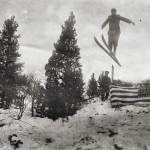 138 – February 14-15, 1912. The Winter Sports Club of Hot Sulphur Springs hosted the state’s first Winter Sports Carnival, which drew 8,000 spectators, including competitors. The competitions included sledding, skating, cross-country skiing, and jumping. Norwegian transplant Carl Howelsen, who moved to the state a year earlier, was the star, winning the jumping event with a 79-foot leap. Hot Sulphur Springs is halfway between Kremmling and Granby, so it begs the question: in 1912, how did 8,000 people get there, and where did they stay?
 139 – May 10, 1967. In perhaps the greatest single game in state collegiate baseball history, Air Force senior outfielder John McBroom had a career in the Falcons’ 38-7 win over Colorado College. He set what still stand as NCAA records as he batted 1.000 – going 9-for-9, the most hits in a single game and the highest 1.000 average that a player did not make an out. He scored six runs and had 12 runs batted in and 19 total bases (the latter two still AFA marks). He almost hit for the cycle twice – he hit two home runs, with one triple, three doubles, and four singles. He would go on to become a flight instructor, among other accomplishments, and retire as a Major General.
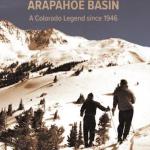 140 – November 1, 1946. Arapahoe Basin is the first ski area after World War II to begin operations in the state; it borders the Continental Divide with a summit elevation of 13,050 feet, one of the highest ski resorts in the world. The original cost was estimated at $150,000, which included two lifts, a rope tow, and trails; lift tickets for the ’46-’47 ski season were just $1.25. A year later, it added its first chair lift and attendance soared to over 12,000 (70,000 by the ’61-62 season).
 141 – July 3, 1982. Denver entered the national record books again, as the Bears’ annual Fireworks Night drew a minor-league record 65,666 fans – as announced at the time. The Denver fire marshal told team officials the crowd had to be capped at that number, but the true attendance was 73,155 as confirmed years later by business manager Bobby Burris (not to mention by looking at an aerial photo of the Mile High Stadium from that night – in no way were there 10,000 empty seats). Omaha spoiled things with a 7-4 win in a strange game, outhitting the Bears 17-5, with the contest scoreless through five and then each team scoring in their remaining four frames. In fact, Omaha’s Bill Kelly had a no-hitter entering the sixth and had it broken up with a triple by Denver native and Abraham Lincoln High School grad Nick Capra.
 142 – August 5, 1967. The Denver Broncos became the first AFL team to defeat an NFL team, downing the Detroit Lions, 13-10, at DU Stadium in what some called “The Little Super Bowl.” The Lions’ Alex Karras stated prior to the game that there was no way Denver would win, and if it did, he’d walk back to Detroit. Did he? Of course not. Two weeks later, the Broncos defeated Minnesota 14-3 at DU Stadium. It was the first year the two leagues played preseason games ahead of the 1970 AFL-NFL merger; of the 15 games that year, the AFL won three, two by the Broncos.
 143 – January 5, 1982. Colorado State senior guard Kathy Lightfoot scored 45 points in a 118-54 win over Southern Colorado in Fort Collins, to date the most points in a single game by a Division I player in the state. Lightfoot had 21 field goals and made 3-of-4 from the free-throw line. The state’s collegiate best for women, across all divisions, is a 52-point effort by Kiiyani Anitielu of Adams State in a 98-54 win over Westminster of Salt Lake City on January 15, 2025.
 144 – September 4, 2004. At 12:30 p.m. MDT, the Altitude Sports & Entertainment Network went on the air, a property of Kroenke Sports Enterprises (KSE). Over $10 million was spent on building a studio, installing production equipment, hiring personnel, and marketing the channel. The first program? A 30-minute special on the making of the network; there were 850,000 to one million subscribers at its launch. The first game was supposed to be the Colorado Avalanche’s season opener at home (on Oct. 1), against San Jose, but the NHL lockout on Sept. 16 cancelled the season.
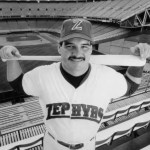 145 – June 2, 1987. The Denver Zephyrs’ Joey Meyer hit what many have documented as the second-longest home run in all baseball history – 582 feet – in the Zephyrs’ 14-7 win over the Buffalo Bisons. Meyer’s shot landed in the upper deck in left field of Mile High Stadium’s massive east stands. Meyer hit three homers that night, driving in seven runs; the longer blast came on a 2-2 pitch from Mike Murphy in the bottom of the seventh inning. On September 10, 1960, in Detroit, Mickey Mantle hit a homer estimated at 643 feet that coined the phrase, “tape-measure home run” in the Yankees’ 5-1 win over the Tigers, universally considered the longest home run ever hit.
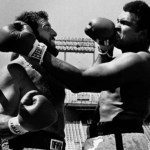 146 – July 14, 1979. It was only an exhibition, as former heavyweight boxing champion Muhammad Ali fought an eight-round match against Denver Broncos defensive lineman Lyle Alzado. Around 20,000 fans attended the event at Mile High Stadium, which wasn’t officially scored but went on all eight rounds; most, if not all, thought Ali won easily. About 600 miles to the East that same night, Jamie Easterly of the Denver Bears pitched a perfect game in the Bears’ 10-0 win over the Iowa Oaks in Des Moines. That was the last of seven no-hitters in Denver’s minor league history that spanned over 100 years.
 147 – September 13, 2000. In high school boys’ tennis, Wheat Ridge defeated Cherry Creek, 5-2, ending the Bruins’ remarkable dual-match winning streak at 316, the longest in the nation. The streak ended when Paul Tinetti ripped a forehand winner down the line to give him and partner Brian Fisher a 7-6 (7-2), 6-2 victory at No. 2 doubles. In 1991, it was Wheat Ridge that ended Cherry Creek’s run of 19 straight national record state championships. The streak, which began in 1972 during Richard Nixon’s first term as president, was and remains the second-longest in the country, behind only the Brandon, Fla., wrestling team, which won 459 consecutive dual meets from 1973 to 2008.
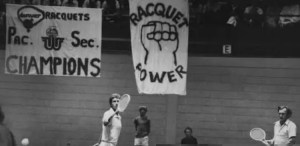 148 – August 26, 1974. The first championship by any Denver professional team (other than minor league baseball) was claimed by the Denver Racquets. They won the inaugural World Team Tennis league title. The Racquets defeated the top-seeded Philadelphia Freedoms, two games to zero in the best-of-three finals. Denver won the Pacific Section with a 30-14 record and beat the San Francisco Golden Gators and the Minnesota Buckskins to reach the finals. The teams were composed of half men and half women; Philadelphia was led by Billie Jean King, the league MVP; Australian Tony Roche (pictured right) was Denver’s player-coach; and the team also had the playoffs MVP, Andrew Pattison (pictured left).
 149 – April 12, 1965. Bob Martin hosted the first sports talk show in the state (and possibly the nation) on this April Friday, when he aired “Sports Line,” interviewed Bronco head coach Mac Speedie, and took public calls. It aired for one hour (6-7 p.m.) on KTLN Radio (1280 AM). Speedie was named interim head coach the previous October when Jack Faulkner was fired, and the interim tag was removed in an announcement on December 12.
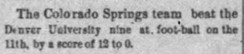 150 – April 11, 1885. In the first intercollegiate football game played west of the Mississippi River, Colorado College defeated the University of Denver Ministers, 12-0. Early newspaper accounts never listed any stats or even most of the scoring plays, instead focusing on who played in the game and who was the stoutest. Both institutions had been around for a while, DU since 1864 and CC since 1874, as the first intercollegiate football game took place in 1869 (Rutgers 6, Princeton 4). The game methodically spread west.