 Long before the current golden era of women’s basketball, when packed arenas, record television ratings, and thriving professional leagues command the national spotlight, architects laid the foundation in the quiet corners of college sports. Among those visionary builders stands Ceal Barry, a coaching titan whose name is forever synonymous with the University of Colorado (CU) and the explosive rise of women’s athletics. WATCH
The remarkable journey of this legendary coach is captured in the powerful PBS special, Ceal Barry: Striving For Excellence…On and Off the Court, part of Rocky Mountain PBS’s celebrated Great Colorado Women series. Through rare archival footage, personal reflections, and interviews with those whose lives she touched, the documentary explores how a girl from Louisville, Kentucky, grew to revolutionize sports in Boulder and cement her place in basketball history.
From the Pre-Title IX Sidelines to a Radio with Dad
Barry’s passion for basketball was forged long before she ever got to play it officially. Growing up in Louisville in the late 1960s and early ’70s, she was one of eight children in a bustling household with five brothers and two sisters. While her school offered softball and volleyball for girls, it reserved basketball strictly for boys.
Undeterred, Barry found her classroom on the radio. Alongside her father, she sat glued to Louisville basketball games, peppering him with questions about zone defenses, turnovers, and assists. Outside, she honed her skills on the asphalt, competing relentlessly against the neighborhood boys.
In high school, the stark disparities of the pre-Title IX era were glaring. While the boys’ teams played on proper wooden gym floors and wore brand-new uniforms and warm-ups, the girls played on tile floors without matching gear. Yet, for Barry and her peers, the lack of resources didn’t dampen their enthusiasm—it only deepened their hunger to play.
Breaking Barriers: Title IX and a Historic Opportunity
Title IX’s passage in 1972 transformed American education and athletics, though implementation took years of legal battles. For Barry, who played field hockey and worked for the University of Kentucky’s first women’s athletic director, Sue Feemster, the legislation opened a whole new universe of possibilities. Suddenly, women weren’t just participants; they could aspire to be coaches, trainers, officials, and athletic directors.
After graduating, Barry took a graduate assistant position at the University of Cincinnati and dove headfirst into scheduling, recruiting, and operations. When the head coach unexpectedly stepped down, Cincinnati’s athletic director took a massive gamble on a 24-year-old assistant.
Tormented by self-doubt, wondering whether a single losing season would ruin her reputation forever, Barry turned to her father for advice. His response was simple and encouraging: “You can do it. Take it.”
Take it, she did. In her first year at Cincinnati, she won 18 games. The second year, she won 27, establishing an immediate knack for winning that would define her career.
Igniting a Revolution in Boulder
 In 1983, Barry arrived at the University of Colorado to take over a struggling women’s basketball program that sat in last place in the Big Eight Conference. Entering an environment dominated by older, more established coaches, Barry initially felt intimidated, but she thrived under pressure.
Operating with unwavering integrity, Barry made a pact with herself: she would build a winning program the hard way, without cutting corners or breaking NCAA rules. She instituted a strict culture of discipline, teamwork, and accountability. As those who played for her noted, recruiting wasn’t just about finding great basketball players; it was about finding young women of high character who would transform into strong adults.
The transformation in Boulder was nothing short of revolutionary. Within five years, Barry turned a program with minimal public interest into a local phenomenon, culminating in a record-shattering sellout crowd at the Coors Event Center. Over a stellar 25-year college coaching career, she amassed 500 wins, maintained a winning record in 20 of those 25 seasons, earned National Coach of the Year honors, and cemented her legacy as CU’s winningest coach. She was inducted into the Colorado Sports Hall of Fame in 2006 and the CU Athletics Hall of Fame in 2010.
A Lasting Legacy
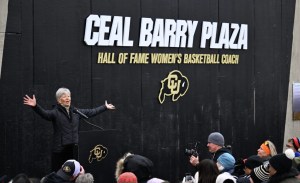 Ceal Barry’s induction into the Women’s Basketball Hall of Fame and the Sportswomen of Colorado Hall of Fame tells only part of the story. As the PBS special Striving For Excellence…On And Off The Court highlights, her true triumph lies in the lives she changed. She built a national powerhouse from the ground up, championed the expansion of women’s sports long before it was fashionable, and proved that excellence comes from grit, heart, and uncompromising integrity.
To witness this inspiring story of a true Colorado trailblazer, you can stream “Ceal Barry: Striving For Excellence…On And Off The Court” on PBS.org or through the PBS app.